

What is Mediation?
“Mediation” is a means of resolving disputes between two or more parties who possess a genuine desire to achieve a mutually satisfying outcome. The counsellor in the process acts as the “mediator” by assisting the disputing parties to focus on a mutual problem, discuss possible solutions and agree upon a solution. Mediation is confidential, however in certain circumstances, a mediator/counsellor may have to disclose information when:
- There is an existing law that requires the mediator to report certain information such as child abuse
- The mediator believes it is necessary to reveal information so as to prevent serious bodily injury or death
- The mediator’s conduct is questionable
- The parties involved in mediation give permission to release information
There are generally no strict rules that mediators use during their meetings; individual mediators rely on their personal experience, skill and training to conduct and guide parties towards settlement.
When is Mediation Used?
Mediation may be used in any situation where there are two or more disputing parties that are unable to resolve their concern/s on their own. Mediation is often used as an alternative or as part of a litigation court process (e.g. family law matters, workplace issues).
Possible Causes of Conflict
There are a number of causes of conflict between individuals. The following list provides examples of some of the possible causes that may be addressed in the counselling/mediation process:
- A specific problem or issue
- Personal antagonism
- Defensiveness
- Expansion of issues
- Poor communication
- A ‘closed’ culture
- Stress
- Escalating mistrust
- Polarisation
- Discrimination, harassment and bullying
Role of the Mediator
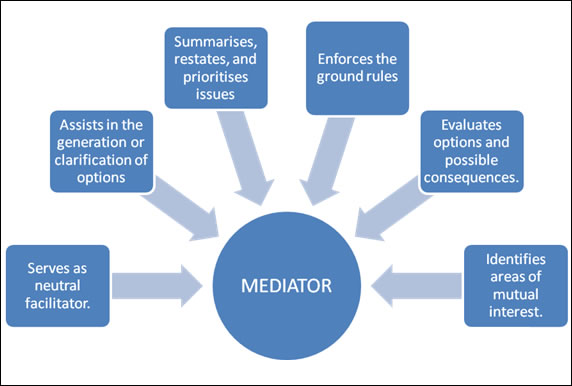
Mediators act as unbiased and independent third parties that facilitate dialogue between parties and help them explore their issues and reach a mutually acceptable agreement. The image below identifies areas of focus for a mediator (Fox, 2002).

Very useful, crisp and worthy stuff.